

When clothing theft also destroys donation sites
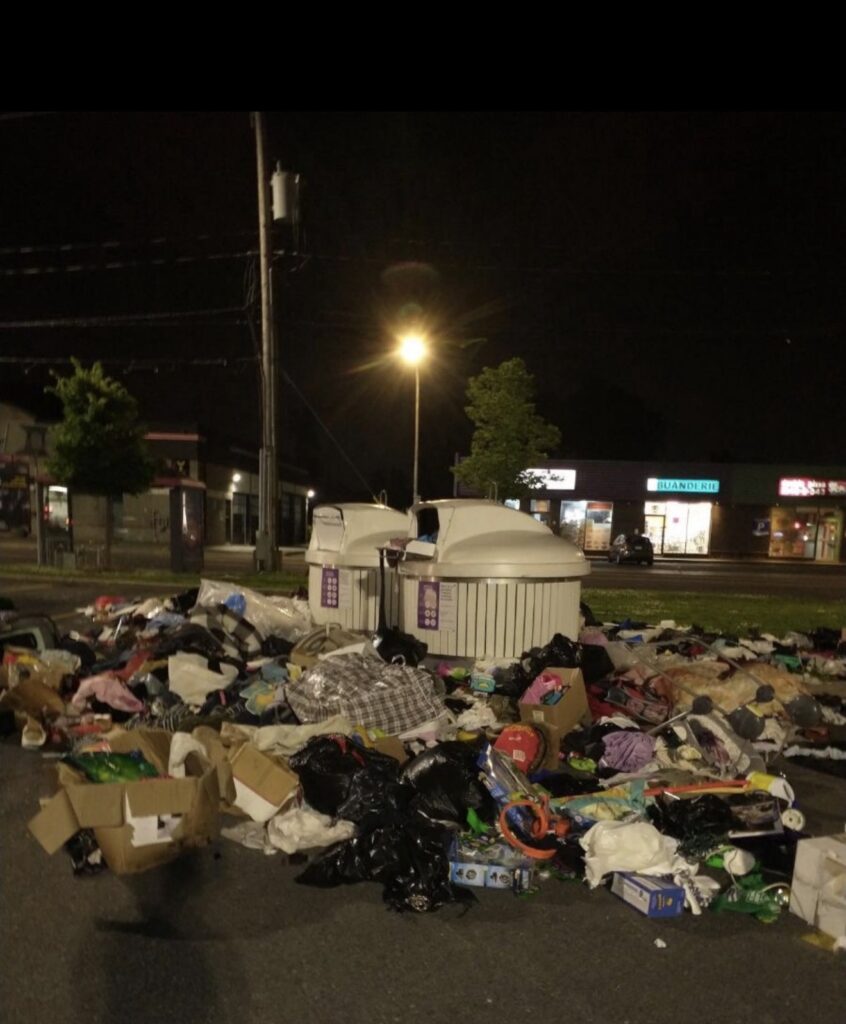
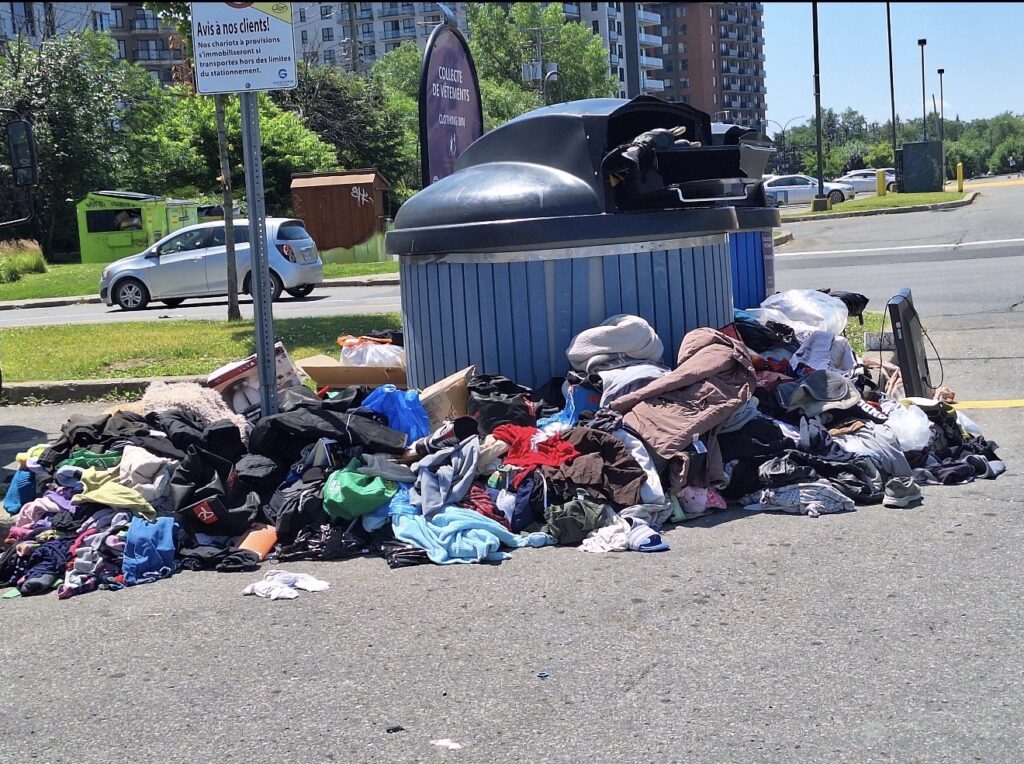
The two photos above show more than just an overflow of clothes. They illustrate a reality little known to the public: the direct consequences of theft from donation containers.
Behind each ransacked site, there’s a whole chain of human, environmental and financial impacts that hit social economy organizations like Fondation La Collecte hard.
And contrary to popular belief, these situations are not caused solely by a surplus of donations. Very often, they start with illegal intrusions into the containers.
A documented problem throughout Quebec
This phenomenon has been reported for several years by several Quebec media.
In 2017, TVA Nouvelles reported that repeated thefts were forcing a Granby organization to constantly repair its containers and absorb significant financial losses. Thieves would force padlocks and even use poles to extract bags of clothing.
In 2026, Radio-Canada also published a report on soiled and vandalized donation bins after trespassing and illegal sorting on the premises. Radio-Canada – Soiled donation bins and clothing thefts
The problem is not limited to containers. Community organizations in Quebec have also seen their warehouses completely raided, resulting in major losses of clothing destined for vulnerable families.
What the public can’t see
When someone illegally enters a container, they do so at their own risk. This equipment is not designed to be entered from the inside.
But beyond the human danger, the real problem often begins after the theft.
Bags are opened on the spot.
Clothes are spread out on the ground.
Items are sorted directly in the parking lot.
Items not deemed “resalable” are abandoned on site.
Result:
– clothes soiled by rain, oil, mud or garbage
– accumulation of stale bags
– major visual pollution
– complaints from shopkeepers and property owners
– municipal calls and emergency interventions
– massive increase in clean-up costs
And when it rains, the situation quickly gets worse.
A large proportion of textiles then becomes irrecoverable and must be sent to the ecocenter or landfill, even if these garments were originally donated for reuse.
An invisible cost for Fondation La Collecte
Each vandalized site entails significant operational costs:
– emergency team travel
– driver overtime
– truck fuel and use
– manual site clean-up
– replacement or repair of locks and equipment
– loss of recoverable donations
– deterioration in relations with landowning partners
And unlike large private chains, social economy organizations absorb these costs directly into their mission.
For Fondation La Collecte, this means fewer resources available to support its social mission with Big Brothers Big Sisters of Greater Montreal.
Each destroyed or contaminated bag represents :
– environmental loss
– economic loss
– social loss
Important confusion to be clarified
It’s also important to remember that Fondation La Collecte does not collect waste.
Our containers are intended only for :
– reusable clothing
– shoes
– small reusable household items
When sites become zones for illegal sorting or dumping, this creates major confusion with municipal waste management services.
This confusion has a direct impact on community organizations and their partners.
A real environmental challenge
Ransacking sites also has a significant ecological impact.
According to an investigation by the newspaper 24 Heures, several Quebec organizations are already overflowing with low-quality textiles linked to overconsumption and fast fashion.
When clothes are left on the ground in the rain or mixed with garbage, their reusability disappears completely.
The result:
– increase in volumes sent to the ecocenter
– increase in transportation and disposal costs
– loss of reusable material
– increase in emissions linked to textile waste processing
A collective responsibility
Most people give with good intentions.
But to preserve these donations, we also need to protect the collection sites.
A few simple gestures can make a huge difference:
– never put bags outside a full container
– report an overflow before depositing
– use home collection when available
– report trespassing and vandalism
– give preference to clean, usable donations
Protecting donations begins even before they are collected.
━━━━━━━━━━━━━━━━━━━
Sources cited
– Radio-Canada – Soiled donation bins and thefts of clothing
– TVA Nouvelles – Repeated thefts from clothing containers in Granby
– Journal de Montréal – Theft from an organization providing clothing to children
– 24 Heures – Parcours des vêtements donnés au Québec (In French only)

